
Product · DataDyne × Zoltner Consulting Group

Mobile Information Platform (MIP): Cloud SMS for the World's Hardest-to-Reach Users
Overview
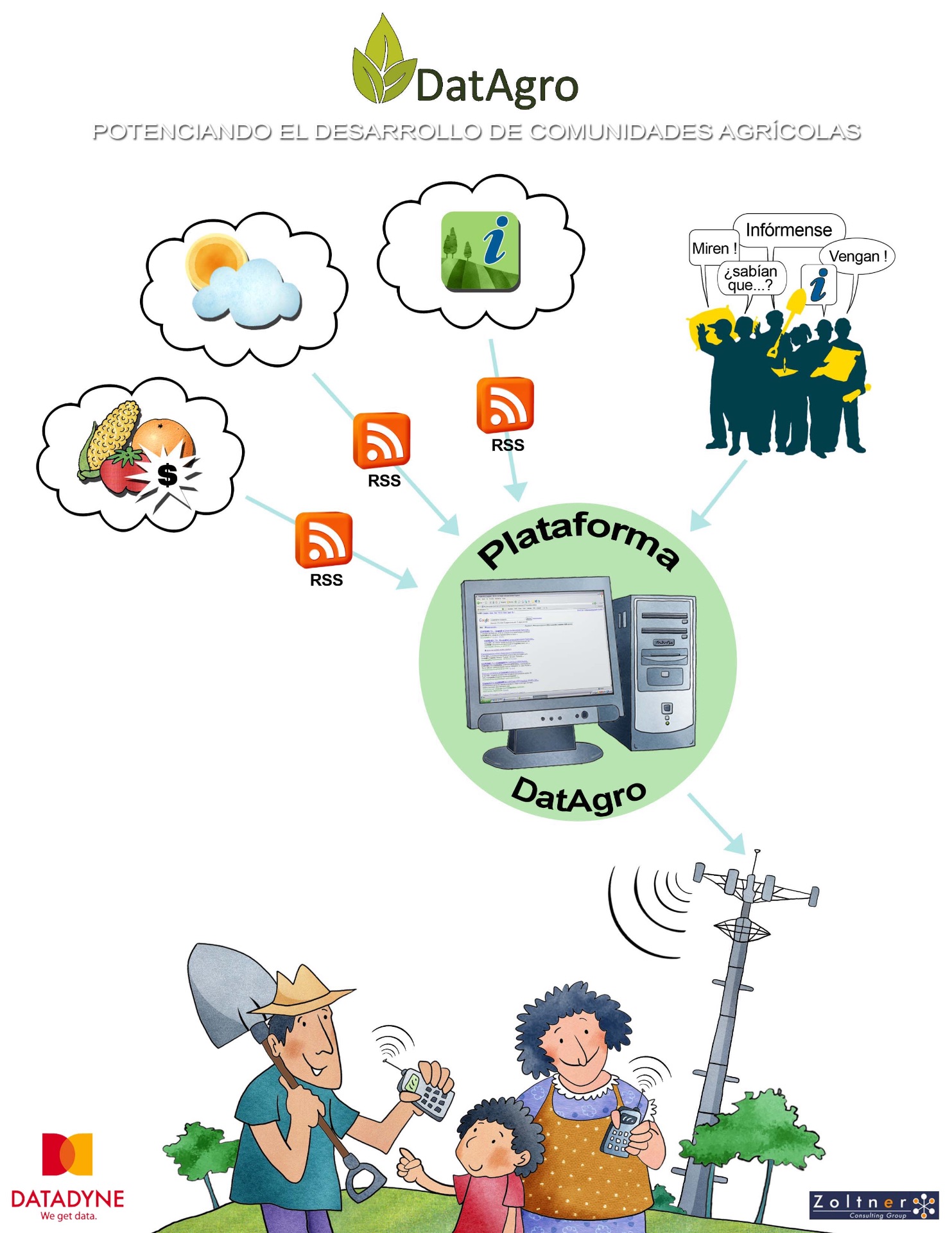
In 2009, DataDyne drew on the success of its EpiSurveyor mobile data-collection tool to create MIP – a cloud-based, web-administered SMS platform optimized for users with basic education and no technical training in rural, developing-country contexts.
Editors write or curate messages once; subscribers receive them on any mobile phone, including the cheapest prepaid handsets – no smartphone, app, or internet connection required.
How it works
- 1Subscribers join by sending a text message.
- 2Administrators create channels of content for groups of subscribers – topics like weather, or message types like emergency alerts – which subscribers can join or leave.
- 3RSS and Twitter feeds can be forwarded automatically as SMS, making content creation automatic.
- 4Administrators send individual or group messages from a simple web interface; two-way SMS lets subscribers query the system.
Origin
The platform was created by local Latin American programmers hired, trained, and supervised by DataDyne during the two-year, Knight Foundation-funded DatAgro pilot with the COOPEUMO agricultural cooperative in Chile's O'Higgins region.
As DataDyne's Senior Vice President for Latin America and the Caribbean from 2009 to 2011, John Zoltner product-managed MIP from the DatAgro pilot into agriculture and health programs in Chile and Peru, working as the link between DataDyne's programmers and the nonprofit, government, and UN clients who used it. MIP later became part of Magpi's cloud application.
Deployments
MIP in action
Demand & replication
Organizations in Argentina, Colombia, Guatemala, Peru, Kenya, Uganda, and the United States requested MIP for their own programs.
Recognition
MIP-powered projects earned the FRIDA Award, the Yahoo! Green Award, the Social Justice Award of the French American Charitable Trust (FACT), and Peru's World Summit Award Mobile nomination.