SaludMóvil / AIEPI Móvil: SMS-Based Health Training for Peru's Andes
Overview
SaludMóvil used DataDyne's Mobile Information Platform (MIP) to give public health professionals and volunteer community health agents in indigenous Peruvian mountain communities simple SMS tools for healthcare training designed to prevent child and maternal deaths.
Health workers in Peru's mountain districts are few, and instructor-led IMCI (AIEPI) training is rare there because it is costly to reach isolated communities. Poor connectivity made internet-based courses impractical.
SaludMóvil followed up instructor-led courses with SMS messages reinforcing key points. Trainees could save the messages on their phones as a pocket reference.
One project, two implementations
AIEPI Clínico – health professionals
Reinforced clinical IMCI training for doctors, nurses, obstetric nurses and nursing technicians at first-level rural facilities.
Two training courses in Acobamba, Huancavelica, in March 2010, for 25 and 23 health professionals.
Content covered care protocols for newborns under 2 months and children from 2 months to 5 years.
AIEPI Comunitario – community health agents
Supported low-literacy, primarily indigenous volunteer health agents working with pregnant women, mothers, and young children.
Courses in Huari and San Marcos, Ancash, in April 2010, for about 40 community health volunteers, implemented with ADRA Perú.
Content covered home visits and key practices on nutrition, newborn health, and care of pregnant women.
What IMCI asks health workers to do
IMCI, the Integrated Management of Childhood Illness, is a strategy developed by the World Health Organization and UNICEF to reduce death and illness in children under five. In Spanish it is called AIEPI. It gives health workers one structured way to assess a sick child, instead of a separate protocol for each disease.
The method follows a fixed order. The health worker first checks for general danger signs: a child who cannot drink or breastfeed, who vomits everything, who has had convulsions, or who is lethargic or unconscious. Any danger sign calls for urgent action and referral, so the child is not held up by the rest of the assessment. The chart booklet has a separate section for young infants under two months.
Next the worker asks about the main symptoms: cough or difficult breathing, diarrhoea, fever, ear problems, and malnutrition or anaemia. Each symptom is matched to a set of signs, and the child is given one or more classifications. Severe classifications require urgent attention. Others are treated at the health centre or at home, with clear instructions for the caregiver.
Diarrhoea shows how the steps connect. The classification decides whether the child needs more fluids and food at home, with oral rehydration salts and zinc, or urgent referral. Either way, the worker counsels the mother on what to do at home, which signs mean she must return at once, and when to come back for a follow-up visit.
Message types
Each trainee received one of two kinds of message, depending on the group they were assigned to. The messages were written in Spanish and tested in April 2010 with community health agents in San Marcos and Huari. The agents read them aloud, explained what each one asked them to do, and suggested changes. Some messages were reworded in response. The final versions are below, with English translations.
Course-based reinforcement
These messages repeated the key points of the course. Most were about danger signs, the signals that mean a child or pregnant woman needs care at once. Examples for community agents:
Señales de peligro en menores de 2 meses: no puede mamar, vomita todo, no gana peso, tiene diarrea. Danger signs in babies under two months: cannot feed, vomits everything, is not gaining weight, has diarrhoea.
Señales de peligro en el embarazo: dolor de cabeza, hinchazón de pies, manos o cara. Ir urgente al centro de salud. Danger signs in pregnancy: headache, swelling of the feet, hands or face. Go to the health centre urgently.
For clinical staff, the course messages included the steps of a neonatal resuscitation flowchart:
El diagrama de flujo de reanimación neonatal presenta una secuencia de pasos: evaluación-decisión-acción. The neonatal resuscitation flowchart sets out a sequence of steps: assessment, decision, action.
General health messages
These went to the comparison group. They covered topics that trainees already found easier, such as nutrition, rather than the course content. Examples:
Entre los 6 y 8 meses la niña o niño debe comer 3 comidas (3 a 5 cucharadas por comida), además de lactancia materna. Between 6 and 8 months, a baby should eat 3 meals (3 to 5 spoonfuls each), in addition to breastfeeding.
Los niños mayores de un año deben comer 5 comidas (7 a 10 cucharadas por comida), más lactancia materna. Children over one year old should eat 5 meals (7 to 10 spoonfuls each), along with breastfeeding.
Photos
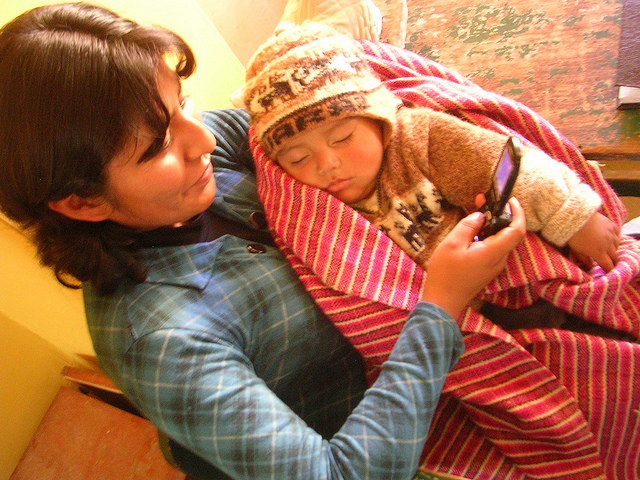
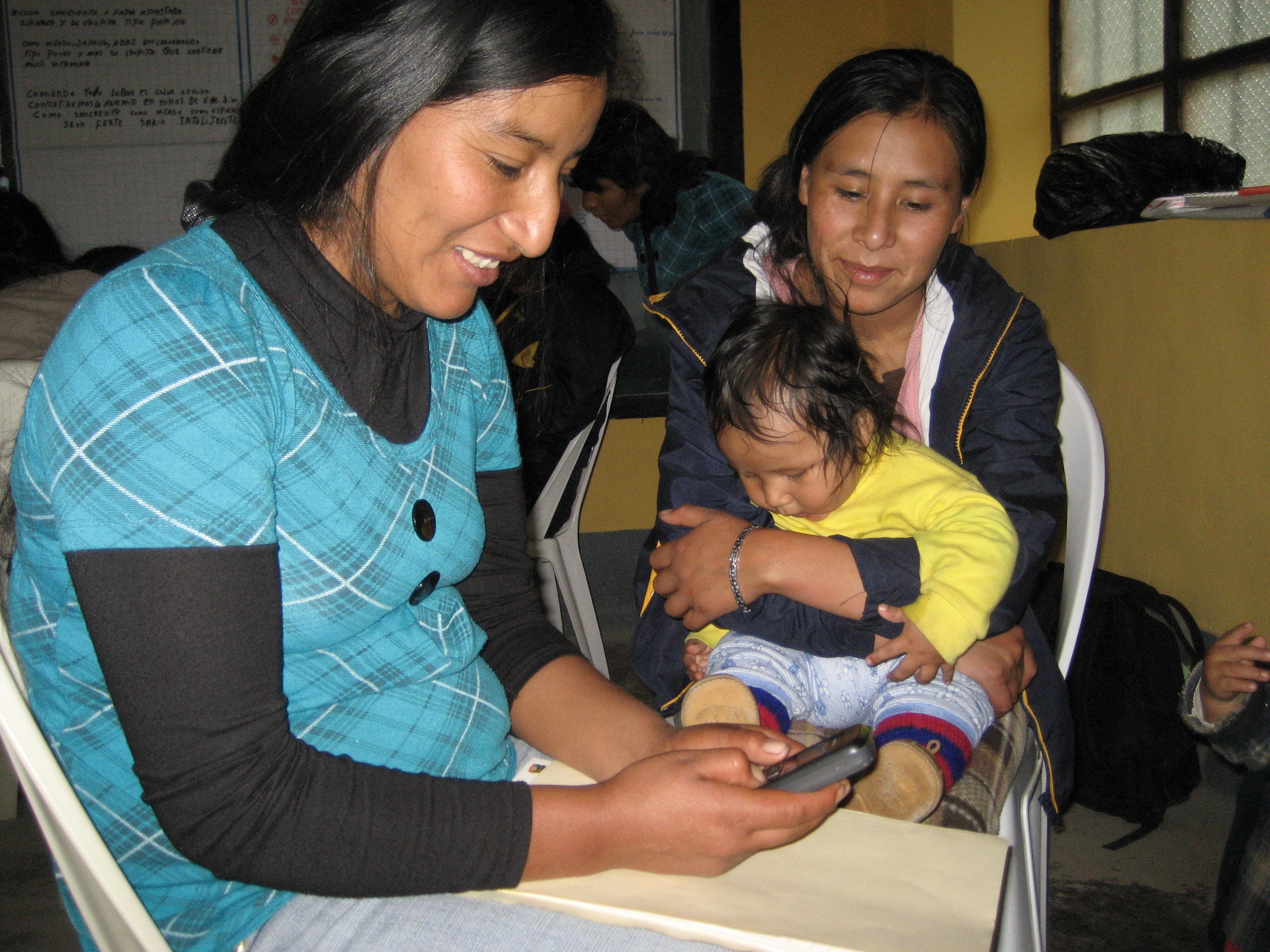
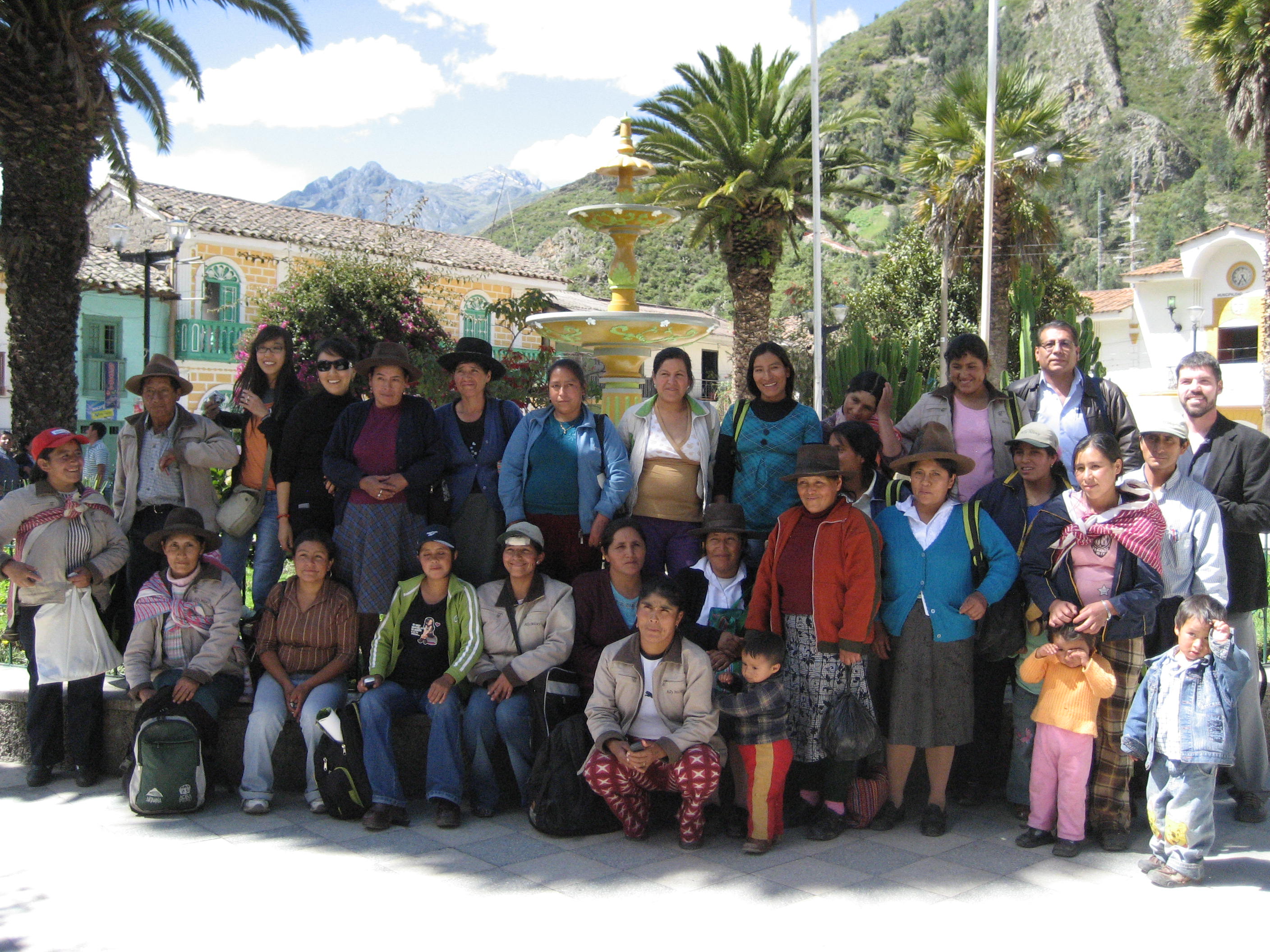
Community health agents receiving health information by SMS during training in Huari, AncashParticipants in the AIEPI Móvil community training, Huari, Ancash, April 2010
Partners & funding
DataDyne.org, a nonprofit based in Washington, DC, developed the Mobile Information Platform and ran the messaging system. The Zoltner Consulting Group, a social enterprise based in Santiago, coordinated the work locally. The United Nations Foundation funded the pilot through DataDyne.org.
Peru's Ministry of Health provided the IMCI curriculum on which the courses and messages were based. The Pan American Health Organization supported the clinical courses. ADRA Perú, the Adventist Development and Relief Organization, delivered the community courses through its Ally Micuy project in San Marcos and Huari, Áncash.
A physician on the project team wrote and selected the messages before they were tested with community health agents.
What the pilot found
Clinical staff improved sharply during both courses in March 2010. Average post-course scores were 14.7 in the first cohort and 17.2 in the second. In the first cohort, the message group did not outscore the comparison group (14.0 against 15.4). In the second, the two groups were level (17.2 and 17.1). The follow-up test scheduled for November 2010 has not been located, so clinical retention is not yet reported.
Among community volunteers, the project summary reports how much of the post-course score each group kept at a final test. The message group kept almost all of it, losing 1% in Huari and 2% in San Marcos. The comparison group lost 14% and 23%. The project calls these results promising but not statistically reliable, because the samples are small. Only 22 of the roughly 40 volunteers have both a post-test and a final test. The project summary's counts of 22 and 19 promoters differ from the workbook's counts of 17 and 23. Two versions of the underlying workbook also disagree on the final-test figures, and that has not yet been resolved.
Assignment was not random. Trainees needed a mobile phone to take part. The rest were ranked by pre-test score and divided between the two groups within each community. The message group received messages on the parts of the course trainees found hardest. The comparison group received messages on topics they already found easier, such as nutrition. Messages were sent over several months.
Recognition
In 2010 the project was nominated as Peru's best m-health project for the World Summit Award Mobile, a global competition for mobile innovation, and it advanced to the global competition.
It was nominated again for the 2011 World Summit Mobile Award. Both nominations were for the project's use of mobile technology to support health training in rural Peru.
Technology
The pilot ran on DataDyne's Mobile Information Platform (MIP), a web-based system for scheduling messages, managing subscribers and receiving replies by SMS. Recipients needed a basic phone that can receive text messages, with no app and no internet connection.
Community agents said the phone would replace the printed manual they carried on home visits, and that the messages would be useful wherever they worked, not only in their own district. Several said that receiving the messages made them feel accompanied in their work.